Getting to System Truth with Software Archeology
Successful modernization depends on System Truth—a reliable, system-level understanding of how code, data, and business logic actually interact. In practice, that means understanding how the system behaves as it runs—not just how it is designed on paper. It is the difference between believing a change will work and knowing in advance how it will behave once it is introduced.
That level of understanding is difficult to sustain. Systems evolve continuously—code changes, data flows shift, and logic accumulates—so any static view quickly drifts out of date. What was once considered safe becomes uncertain as dependencies shift and behavior changes. The issue is not a lack of information; it is the inability to maintain a coherent, current view of execution as the system evolves.
What System Truth requires
Understanding how a system behaves in execution requires a higher standard—one that goes beyond static views or partial insights. That standard cannot be met through any one view of the system.
System Truth is not a single artifact or perspective. It is an execution-level understanding that emerges from three interdependent layers: structure, state, and intent.
Structure — what exists. The system’s composition—services, classes, APIs, schemas, and infrastructure—defines boundaries and relationships. This layer is typically well mapped by existing tooling.
State — how data moves. The flow and transformation of information across components introduces time and variability—how data is created, modified, and propagated. It explains how information travels through the system, but not why outcomes occur.
Intent — how decisions are made. The business logic embedded across the system is rarely centralized. It is distributed across services, conditionals, and transformations—often shaped by years of incremental change—and determines which paths execute and why.
Individually, each layer provides only a partial view—one that, when used in isolation, introduces systematic risk into decision-making. Together, they explain how the system behaves, enabling decisions grounded in how the system actually operates rather than assumptions.
Software archeology: Reconstructing behavior
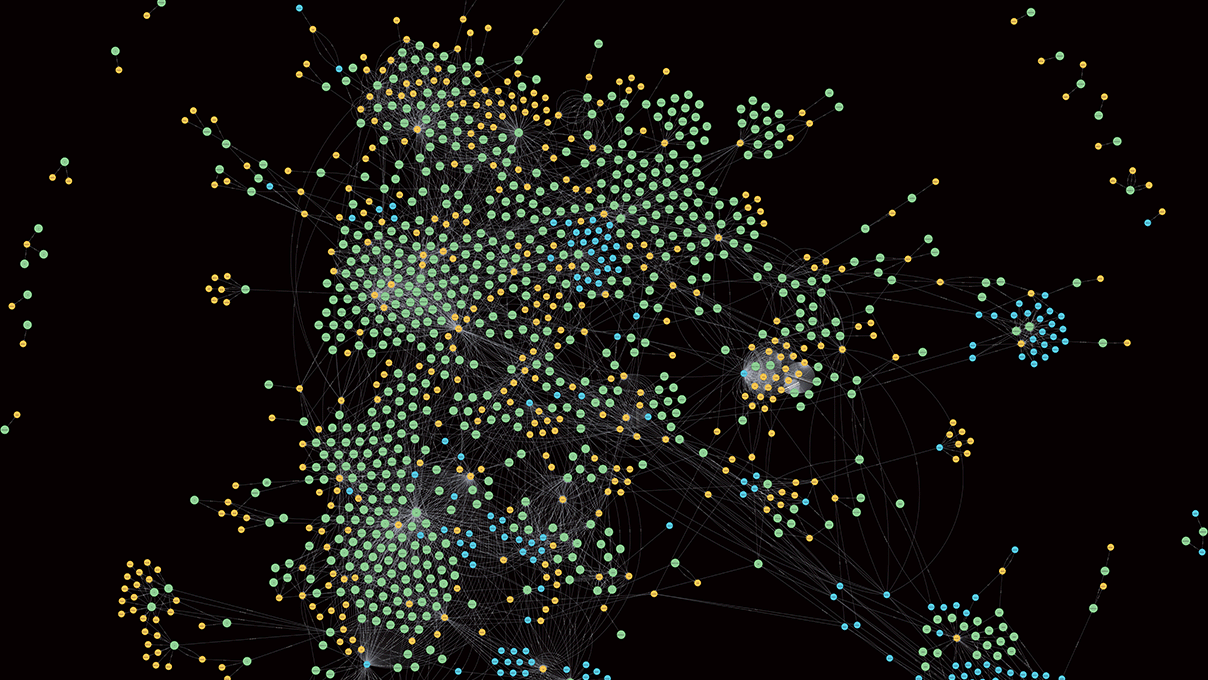
Software Archeology makes system behavior explicit by reconstructing how structure, state, and intent interact in execution. It traces how logic propagates across services, how data influences decisions, and where dependencies form across boundaries.
This is a fundamentally different approach from traditional methods:
- Documentation captures intended design—but drifts from reality
- Static analysis enumerates structure—but does not explain behavior
- Observability shows runtime activity—but not full decision pathways
Software Archeology connects these fragments into a coherent model of execution. This shifts teams from interpreting systems to working from evidence.
In practice, it surfaces relationships that static views miss: cross-service dependencies, logic conditioned by events elsewhere, and execution paths that persist long after their original purpose has faded.
Consider a pricing function that appears isolated. Structure and lineage suggest clear boundaries and inputs. But when execution is reconstructed, a legacy authentication rule alters pricing via a shared transformation—an invisible dependency until it breaks in production.
From behavior to execution confidence
Execution confidence—the ability to predict the impact of change before it is introduced—comes from a behavioral model of the system that captures how decisions propagate, how data shapes execution, and how outcomes are produced under real conditions.
This changes how modernization is executed:
- Impact is determined rather than approximated
- Dependencies are identified before changes are made
- Testing is focused on the pathways that actually drive outcomes
Instead of over-testing, teams target what matters. Instead of discovering issues in production, they surface them in advance. Instead of coordinating around conflicting interpretations, they operate from a shared, evidence-based model.
Execution becomes predictable—not because systems are simpler, but because their behavior is understood.
Enabling precision in modernization
This is not an incremental improvement in how teams work—it is a structural shift in how uncertainty is managed. Without System Truth, teams are forced to manage uncertainty through process: more coordination, more validation, more buffering against unknowns.
Without System Truth, teams are forced to manage uncertainty through process: more coordination, more validation, more buffering against unknowns.
With System Truth, that burden moves out of process and into the system itself. Understanding is embedded, and dependencies are visible. This is what enables precision—not just faster execution, but more controlled, predictable outcomes.
Software Archeology makes this level of precision possible by turning system behavior into something that can be understood, queried, and acted on.