
Software Archeology Platform
Understand how complex legacy systems actually behave—directly from the code
Dependency graphing at scale
Large, multi-language codebases are analyzed in a read-only environment to surface call graphs, service boundaries, and cross-system dependencies.
Executable system knowledge
System structure, data flows, and logic are maintained in a queryable model that stays aligned with the code as it evolves.
Evidence-based change analysis
Observed system behavior is used to assess blast radius, risk, and safe-to-modify areas before change.
Purpose-built system understanding for complex legacy platforms
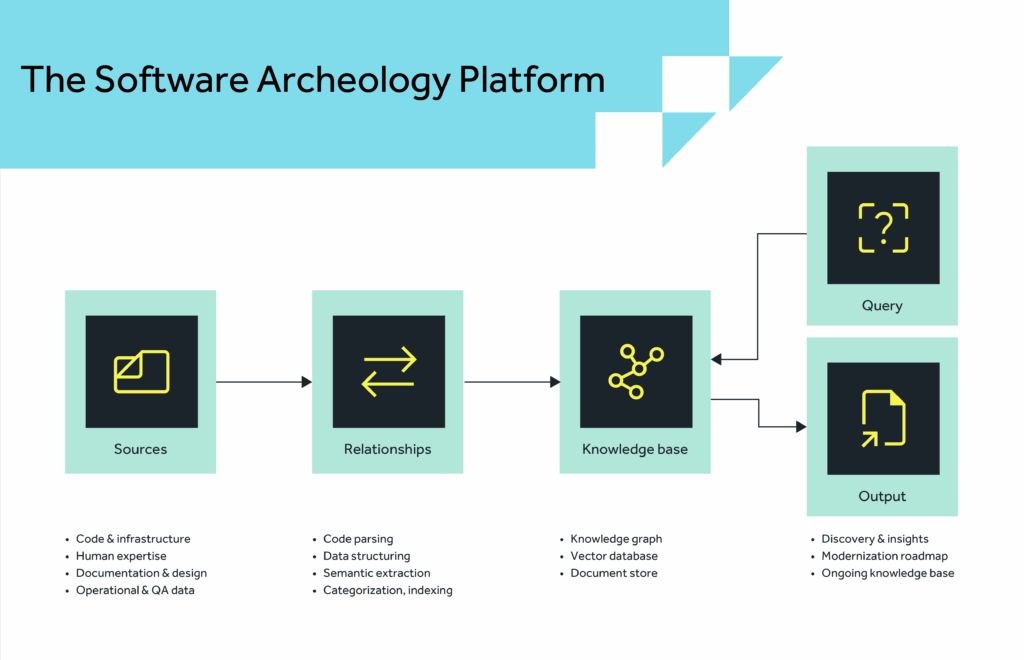
3Pillar’s Software Archeology Platform extracts durable, evidence-based system understanding from large, complex, undocumented software platforms. By analyzing systems directly from source code in a read-only environment, the platform captures how software actually behaves—its structure, dependencies, data flows, and embedded logic.
The result is executable system knowledge that can be explored, shared, and reused over time across teams and initiatives. As code, teams, and architecture evolve, this understanding remains aligned with reality, reducing uncertainty and preventing the gradual decay that plagues traditional documentation.
What the platform produces
Rather than abstract capabilities, our Software Archeology Platform produces concrete, reusable system knowledge that can be inspected, queried, and reused across initiatives. Core system knowledge artifacts include:
Code-derived system model
A structured representation of the codebase that establishes an accurate baseline of system structure across large, multi-language repositories.
Cross-system dependency graphs
Explicit mappings of call paths, service boundaries, shared libraries, and integration points that influence coupling and change risk.
Executable logic and data paths
Traceable views of how data is created, transformed, and consumed, including embedded business rules that drive runtime behavior.
Living system documentation
Diagrams and reference material generated directly from source and kept aligned as the codebase evolves.
Key characteristics
System understanding is derived from source code and observed behavior, not assumptions or outdated diagrams.
Analysis is performed in read-only environments with no impact on running systems.
Optimized for large, multi-language systems that have evolved over years or decades.
Captured knowledge persists and compounds across modernization, AI, and operational contexts.


Achieved $1.75 MM in ROI driven by net new revenue and cost savings
“Through our partnership with 3Pillar, we’ve credentialed ourselves as the industry’s most creative, forward-thinking tech team.”
Chief Technology Officer
Top US Multiple Listing Service

75% reduction in volume of customer support calls
Launched new product quickly, allowing company to enroll new customers and increasing availability from 16 to 26 states in less than a year




Align. Adapt. Accelerate.
Upgrade your legacy applications to enhance security, improve performance, and reduce costs. Reach out today to get started.
Let’s Talk